I never thought a keyboard could change how I feel about work. For years, I just used whatever came with the laptop — flat, silent, and forgettable. But after one too many nights editing late in my Brooklyn apartment, with my wrists sore and thoughts tangled, I decided to look for something better.
That’s how I stumbled into the world of mechanical keyboards — a world I once thought was just for gamers and programmers. What I didn’t expect was how deeply it would change the way I type, write, and even think. In this review, I’ll share how switching keyboards made me rediscover the joy of typing, what to look for if you’re considering one, and whether the hype really lives up to the sound of those satisfying clicks.
First Impressions
The first time I unboxed my Keychron K6, I was surprised by how solid it felt. No flimsy plastic or hollow flex — just a compact aluminum frame that looked like it belonged on a designer’s desk. The keys had a sculpted profile that instantly invited my fingers to rest on them.
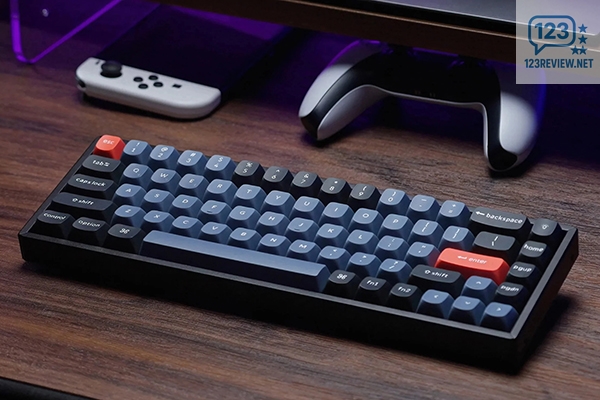
And then came that first press — the gentle tactile bump, the click, and the immediate response. It felt mechanical in the most human way. Suddenly, typing wasn’t just about inputting words; it was about rhythm, sound, and feedback.
In a city that never stops making noise, this keyboard made the right kind.
Real-World Use
Typing on this keyboard became a small daily ritual. I’d start my morning coffee, open my laptop, and wake up the switches with a few keystrokes — like warming up an instrument before a performance.
Working in New York means space is limited, so I appreciated the 65% layout. It fits neatly between my coffee mug and notebook, and I don’t miss the numpad at all. The Bluetooth connection is quick, and the battery lasts long enough that I forget it’s wireless.
The sound, though, is what gets me. There’s a music to it — a low, rhythmic clatter that keeps me focused. It’s strangely meditative, almost like rain on a window. My typing speed improved, but more than that, I found myself wanting to write more.
Even mundane tasks — answering emails, renaming files — felt less mechanical and more intentional.
Performance & Key Features
The Keychron K6 I use has Gateron Brown switches — the Goldilocks of the switch world. They’re tactile without being noisy, responsive without being fatiguing. I’ve tried others since (the crisp Blue switches, the buttery Red ones), but I keep coming back to the Browns.
Other things I love:
- Hot-swappable switches — I can easily change them without soldering.
- Wireless or wired flexibility — connects via USB-C or Bluetooth 5.1.
- Per-key RGB lighting — not just for looks; the gentle backlight helps during late-night writing sessions.
- Solid build — minimal flex and excellent weight distribution.
These might sound like small details, but they add up to a typing experience that feels built, not just assembled.
Pros & Cons
✅ Pros:
- Excellent tactile feedback that enhances typing flow.
- Compact, stylish design perfect for small desks.
- Long battery life and reliable Bluetooth.
- Customizable switches and keycaps.
❌ Cons:
- Not ideal for shared spaces — it’s not silent.
- Slightly heavy for travel.
- Keycap legends can wear with heavy use.
Value for Money
Mechanical keyboards aren’t cheap — and this one wasn’t either. But after a year of use, I’ve realized it’s an investment in comfort and creativity. It’s like paying more for a chair that saves your back.
If you type for a living — whether that’s writing, coding, or just living in your inbox — a good keyboard can genuinely change how you experience work. You’ll type faster, more comfortably, and with fewer mistakes.
I’ve used mine for over twelve months now, and it still feels brand new. The switches haven’t softened, and the aluminum body has held up through countless coffee spills and late-night sessions.
Alternatives & Comparisons
I’ve tried a few others in the same category:
- Logitech MX Mechanical: Sleek and reliable, but lacks the soul and sound of a true mechanical board.
- Keychron K2: A bit larger, with more keys, but I prefer the K6’s compact layout.
- Varmilo VA87M: Beautiful build quality, though pricier and less flexible in connectivity.
Each has its charm, but for the balance of design, performance, and price, the K6 still wins for me.
My Verdict
The Keychron K6 didn’t just make typing better — it made it personal. It reminded me that tools matter. When something feels good to use, you use it more. And in a world full of distractions, anything that helps you enjoy focus is worth keeping.
Now, whenever I sit at my desk, coffee steaming beside me, I hear the faint rhythm of keys echoing through my apartment. It’s the sound of words being built, one keystroke at a time.
Written and tested by Chi Tran for 123Review.net.
Affiliate links may earn a commission, but opinions are my own.