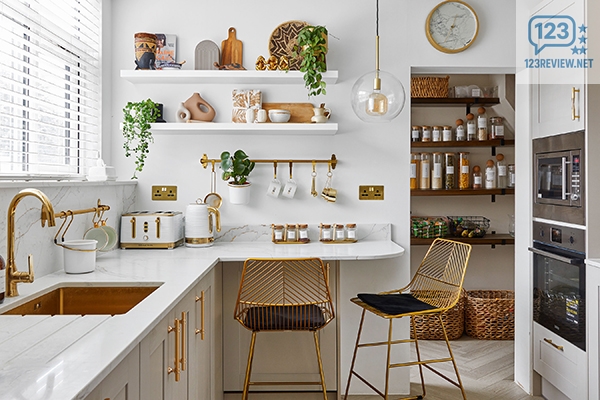
When you live in a small New York apartment, every square foot matters. My first apartment barely had room for a couch, let alone a full dining set. That’s when I started falling in love with multi-purpose furniture — pieces that don’t just sit there but actually work for you.
Over time, I’ve learned that clever design can completely change how a small space feels. The right table or sofa can turn a cramped studio into a flexible, comfortable home. In this review, I’ll share how I’ve used multi-purpose furniture in my apartment — what’s worked, what hasn’t, and the pieces I’d recommend to anyone trying to live smart in a small space.
The First Piece That Changed Everything
The first piece that sold me on the idea was a folding dining table that turned into a desk. I found it secondhand, scratched but sturdy, with a smooth hinge that folded down into half its size. Most days it served as my work desk — laptop, notebook, and coffee mug perfectly lined up. When friends came over, I’d extend it and fit four people comfortably for dinner.
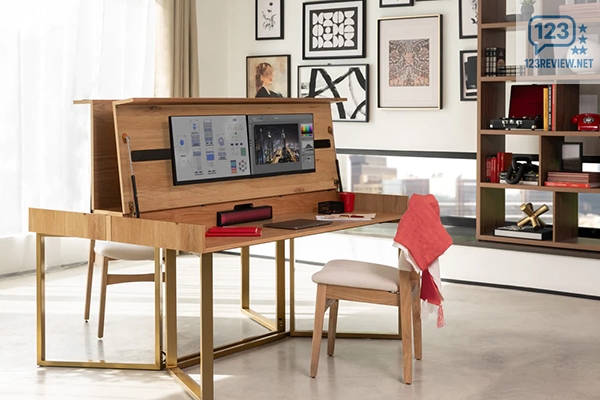
That flexibility completely shifted how I thought about furniture. Instead of just buying things that looked good, I started looking for things that did something.
Living Small, Living Smart
In a city where rent costs more than most people’s cars, efficiency is a form of luxury. Multi-purpose furniture lets me have a clean, open space without giving up comfort. My sofa bed, for example, isn’t one of those flimsy ones with awkward metal bars. It’s a thick, firm couch that folds flat with one pull — a lifesaver when family visits.
The ottoman doubles as both storage and a side table. It hides all the stuff I don’t want to see: extra blankets, magazines, that random charging cable I might need “someday.”
And then there’s my bookshelf divider — it separates the “bedroom” from the “living room,” even though both are technically in the same ten-by-twelve space.
Each piece doesn’t just save space; it gives the illusion of more of it. That’s a quiet kind of magic.
What I Look for in Multi-Purpose Furniture
Over the years, I’ve learned a few rules.
1. Solid Construction Matters.
A wobbly folding table is worse than no table at all. If a piece moves, folds, or transforms, it has to do so smoothly. Metal hinges and thick panels make all the difference.
2. Neutral Design Wins.
Multi-purpose pieces often serve different roles, so they need to blend in. I tend to pick light wood, matte black, or white finishes that won’t clash when I rearrange.
3. Comfort First.
No one wants a bed that’s secretly a rock or a chair that hurts after ten minutes. Function is great, but daily comfort is non-negotiable.
The Hidden Benefit: Flexibility
What I love most isn’t just the space-saving — it’s the freedom. My apartment changes depending on the day. On a quiet Sunday, it’s a lounge. During the week, it’s an office. When friends visit, it becomes a guest room.
This kind of flexibility also keeps me from accumulating stuff. I’ve become intentional about what comes through the door — if it can’t serve more than one purpose, it has to be something I truly love.
The Few That Didn’t Work
Not every clever idea turns out practical. I once bought a coffee table with hidden stools inside, thinking it was genius. The problem? The stools were too low and uncomfortable, and the storage compartment was so tight it became a hassle to use.
Another was a wall-mounted fold-out desk — perfect in theory, but the installation required drilling into an old plaster wall that didn’t agree with modern anchors. The result: one desk, one cracked wall, one slightly bruised ego.
Even those “failures” taught me something: simplicity almost always wins.
My Favorite Finds
If you’re looking to try this lifestyle, here are a few types I genuinely recommend:
- Lift-top coffee tables — perfect for laptops or dinner in front of the TV.
- Convertible sofa beds — avoid the cheap ones; look for thick cushions and solid joints.
- Storage benches — ideal for shoes, bags, or seasonal clothes.
- Modular shelving units — they can change shape as your needs change.
- Drop-leaf tables — small footprint, big payoff.
Most of my pieces came from IKEA, Wayfair, or Facebook Marketplace. It’s not about brand prestige — it’s about finding the right fit.
Why It Feels Right
There’s something satisfying about living with intention. When every item in your home earns its keep, you start to notice what actually adds value to your day. Multi-purpose furniture turns the act of living small into a creative challenge rather than a compromise.
It’s less about minimalism and more about optimization.
My Verdict
If you live in a small space — whether it’s a New York studio or a cozy one-bedroom — multi-purpose furniture is worth every penny. It makes your home adaptable, efficient, and surprisingly personal.
I can’t imagine going back to owning bulky, single-use pieces. The freedom to reconfigure my space on a whim keeps life flexible and fresh — and in a city that never slows down, that adaptability feels like the ultimate luxury.
Written and tested by Chi Tran for 123Review.net.
Affiliate links may earn a commission, but opinions are my own.